By DailyAgent
Abuja, Nigeria
Nigeria’s strongest performances in the Unified Tertiary Matriculation Examination (UTME) between 2016 and 2025 reveal a consistent pattern: states investing in quality teaching, digital learning, examination preparation and school infrastructure are producing more top candidates.


Data verified by the Joint Admissions and Matriculation Board (JAMB) and widely reported in national education reviews show that Anambra, Edo, Ekiti, Ondo, Lagos, Kaduna, Oyo and Imo states repeatedly produced some of the country’s highest-scoring candidates in a decade.
UTME Top Performers in a Decade
Among the top performers were Akenbor Osarugue from Edo State with 359 in 2016; Akingbulugbe Ayomide from Ondo State with 353 in 2017; Galadima Zakari from Kaduna State with 364 in 2018; Ezeunala Franklin from Imo State with 347 in 2019; Maduafokwa Agnes from Anambra State with 365 in 2020; Monwuba Chibuikem from Lagos State with 358 in 2021; Adebayo Eyimofe from Ekiti State with 362 in 2022; and Nkechinyere Umeh from Anambra State with 360 in 2023.

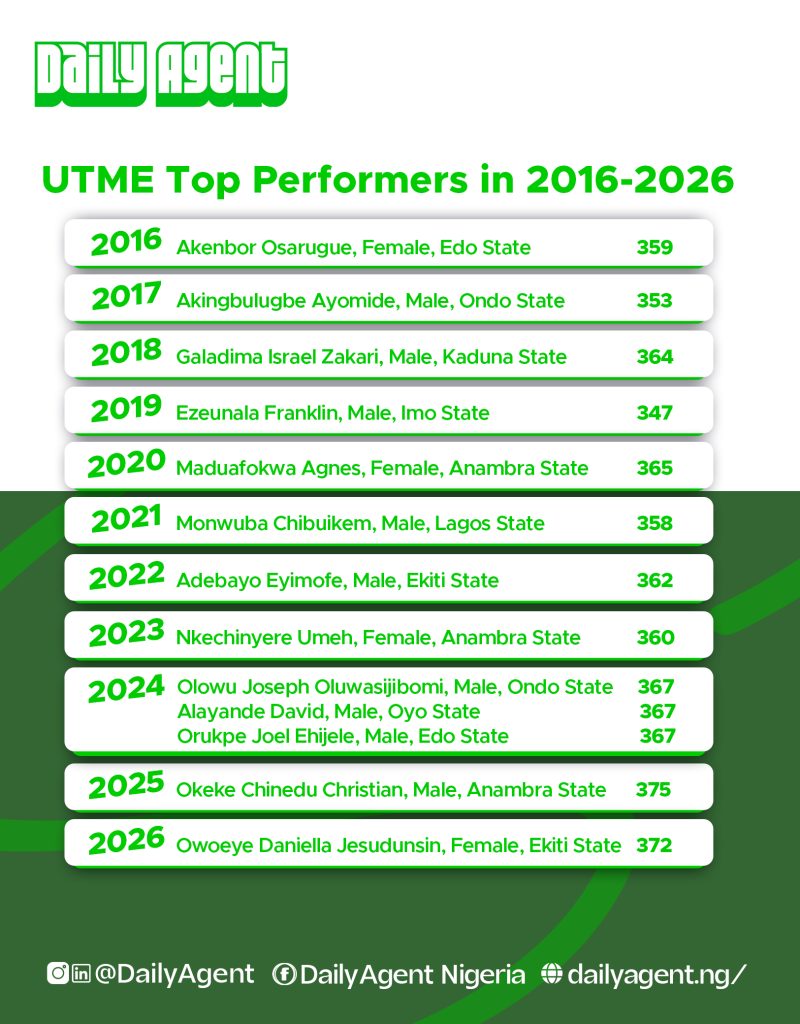
Recent trend analyses also showed improved national performance in 2024 and 2025, with a sharp increase in candidates scoring above 300 marks, despite technical challenges recorded during the 2025 and 2026 examination cycles.

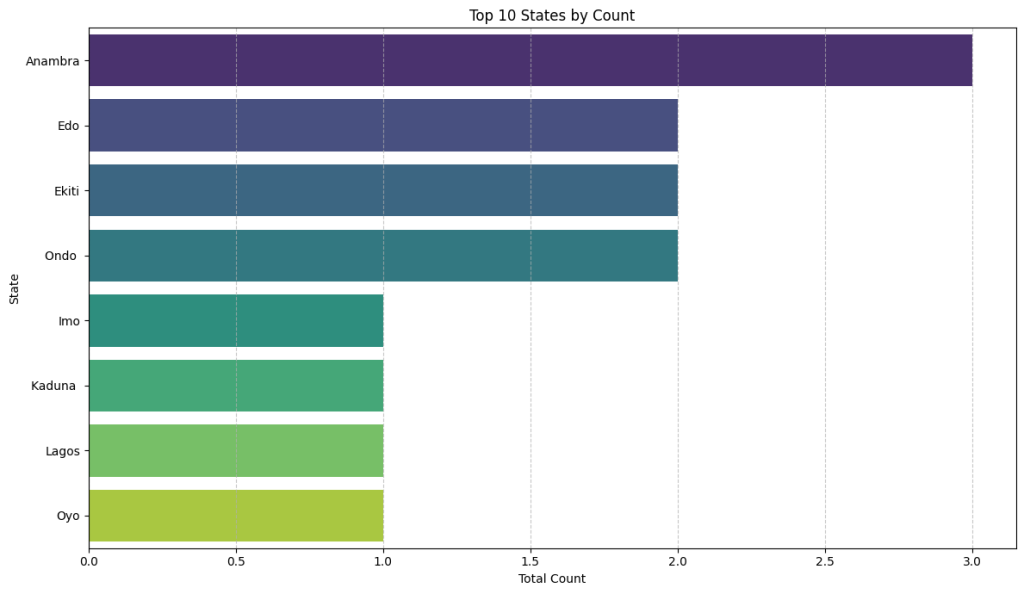
How UTME Top-Performing States approached education in a decade
DailyAgent’s assessment of the leading UTME-performing states in Nigeria shows that sustained investment in education funding, teacher quality, digital learning and infrastructure development has significantly influenced students’ academic outcomes.
In Anambra, the successive governments have consistently prioritised education as a strategic sector. The state allocated 46.9 per cent of its 2026 budget — about ₦359 billion — to education, one of the highest ratios in Nigeria and above UNESCO recommendations. Between 2022 and 2026, the state recruited over 8,115 teachers to address shortages in public schools and improve the quality of classroom learning. Anambra’s strong ecosystem, with a mix of government, mission, and private schools, coupled with a culture of quality assurance, has also sustained high UTME performance over the years.
Edo State emerged as a model for technology-driven public education reforms through the EdoBEST programme during Godwin Obaseki’s administration. Since 2018, the state has retrained more than 16,000 teachers using digital teaching systems and data-driven monitoring. The government distributed thousands of digital tablets, over 11 million learning materials and renovated more than 9,600 classrooms across public schools. Edo’s reforms also strengthened teacher accountability, attendance monitoring and curriculum delivery, helping improve foundational learning outcomes.
In Ekiti State, successive administrations have sustained investment in teacher welfare, merit-based recruitment and digital education. The state government has expanded smart classrooms and digital learning facilities in secondary schools while partnering with private organisations to deploy interactive smartboards and e-learning systems. Ekiti’s long-standing reputation for valuing education, combined with consistent teacher development programmes, has contributed to strong academic performance among students.
In Ondo State, the transformation continued with the introduction of the Mega School and education quality assurance initiatives under Olusegun Mimiko, which improved access to quality and digital education with improved teachers’ working conditions. The Akeredolu administration reinforced the legacy with the renovation of public schools across the state, which commenced during Olusegun Agagu’s administration. The state has one of the lowest out-of-school children in the country.
Assessments revealed how Lagos State has also benefited from higher education spending, urban learning infrastructure, technology adoption and access to competitive private education. Investments in modern classrooms, digital literacy and STEM education have strengthened students’ readiness for computer-based examinations like UTME.
Analysis of the top-performing UTME States in the past decade—What the analysts say
Analysts say the pattern is clear: states that invest in qualified teachers, school infrastructure, digital learning tools, quality assurance systems and consistent education financing tend to produce better academic outcomes. Conversely, poor funding, weak infrastructure and teacher shortages continue to undermine performance in many parts of Nigeria. Sustained investment in public education remains critical to improving national learning outcomes and building Nigeria’s future workforce.
Education analysts say the success of these states is not accidental. Lagos, Anambra and Edo have expanded digital learning, supported the growth of private education and strengthened science and technology teaching. Ekiti has sustained a reputation for teacher quality and public investment in secondary education, while Anambra continues to benefit from strong competition among mission and private schools.
States producing top UTME candidates also tend to record higher levels of investment in classroom renovation, computer-based test preparation centres, and teacher development programmes. In contrast, states facing poor school infrastructure, teacher shortages and weak education funding continue to struggle with low learning outcomes.
The UTME trend signals the need for Nigerian states to prioritise education budgets, modernise public schools, recruit and retrain teachers and improve access to technology-driven learning. Experts argue that sustained investment in teachers, libraries, laboratories and digital literacy will not only improve UTME scores but also strengthen Nigeria’s long-term human capital development.
Editor’s note: This report made use of publicly available data provided by the Joint Admission and Matriculation Board (JAMB) and various state governments. Watch out for the additional publication on the views of the education analysts interviewed by DailyAgent.